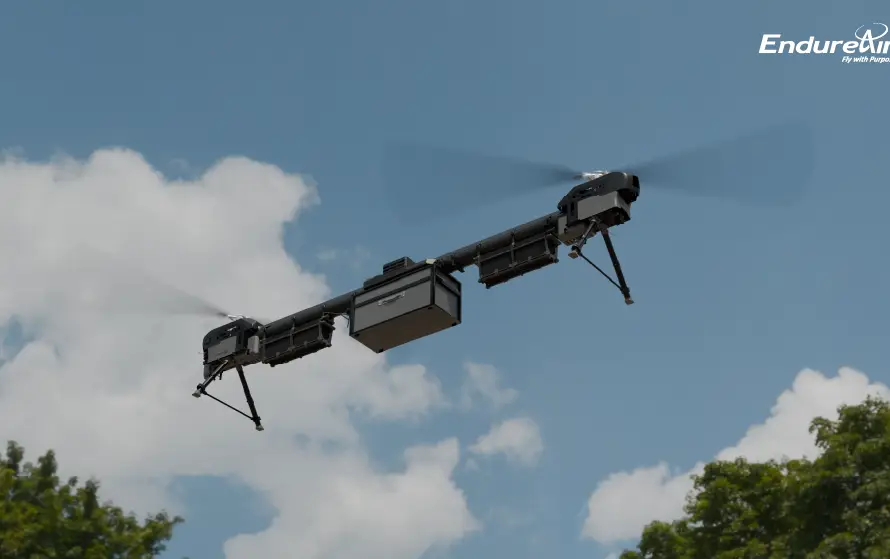
Mid-Mile Delivery in 2026: The Ultimate Link Empowering Modern Supply Chains with Drones
Mid-mile functions as a vital link between major storage locations and the final delivery points to customers. The last-mile delivery process attracts maximum focus, but the mid-mile delivery process directly controls the speed, dependability, and budget efficiency of product movement through the entire supply chain.
As the supply chain is growing complex, the organisations are no longer understanding the supply chains as the movement of materials and goods from one place to another, that is, from Point A to Point B; they are requiring a stronger system that connects manufacturing units to the end consumer, and this is where mid-mile delivery comes into the picture.
Mid-mile delivery used to rely entirely on manual labour and heavy gear like trucks, helicopters, and ground networks. Those methods came with real limits, especially around cost and what was actually doable. Drones have become the preferred choice for transporting cargo to any location. Those locations include warehouses, district centres, zones, industrial, mining, healthcare sites, defence, construction sites, and Infrastructure for transport links. Businesses with challenging deadlines and tough outdoor tasks can rely on drones to easily and effectively support mid-mile transport operations.
How Drones are Strengthening the Logistic Networks?
Drones improve mid-mile delivery operations because they provide quick transportation between designated delivery points. Drones achieve direct flight paths between hubs, which eliminates waiting times that traditional vehicles experience because of road and traffic, terrain, and complex routes.
A drone’s fast delivery operations allow it to distribute urgent supplies to multiple locations like a central warehouse, a regional hub, a logistics centre, an industrial site, a base, and a remote project area.
Drone in mid-mile delivery can support the following:
- Movement of goods from warehouses, regional hubs, to the end location
- Delivery of food and emergency kits
- Healthcare and medical logistics
- Mining and industrial site supply movements
- Remote area delivery
- Defence and high-altitude logistics
- Powerline and infrastructure projects
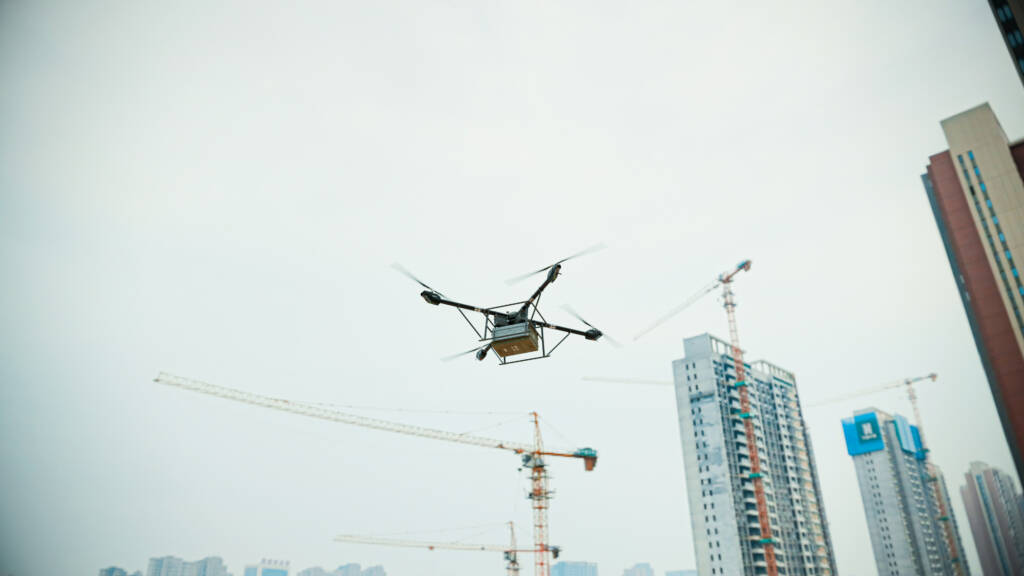
How is Aerial logistics transforming mid-mile delivery effectively?
Mid-mile delivery is changing rapidly. The main transport method was road trucks. Recently, aerial options have been introduced that provide faster and more flexible routes. As businesses try to simplify their supply chains, drone systems are moving shipment loads between different hubs, distribution centres, and industrial sites. These alternatives are reducing travel time. They also provide traffic and terrain avoidance. A few advantages are given below:-
Faster Delivery times:-
Drone-enabled mid-mile delivery eliminates road congestion and delays caused by different land types. Aerial routes, which go directly to their destinations, help decrease delivery times, making delivery timelines more reliable.
Accessibility:-
Drones transport goods over roads that are either too unreliable or do not exist. This technology allows access to remote mines, places to maintain powerlines, military zones, and medical facilities in isolated industrial areas.
Low Operation Cost:-
The system provides an efficient solution for urgent delivery of lightweight items that require immediate transportation. The system demonstrates operational efficiency when handling urgent deliveries of lightweight products that carry high importance.
Reliability:-
Mid-mile logistics achieve better consistency through predefined flight paths and controlled operations. Drones enhance tracking capabilities, together with improved visibility and route-level monitoring.
Ensuring Timely Delivery:-
Drones can deliver essential items for urgent deliveries because they can transport spare parts, medical supplies, and other essential items to their destinations. The solution enables industries to achieve faster operational response times because they can now deliver products to their customers without any delays.
Mid Mile Delivery Across Important Sectors: Reshaping Healthcare, Defence, and Industry Sectors
Drones provide important mid-mile delivery services, which benefit industries that rely on quick service delivery and constant operational access. Drones carry essential cargo between operational hubs and field sites and remote military locations through multiple sectors that include healthcare emergency response, mining, power, and industrial operations, and defence logistics.
Healthcare and Emergency Logistics-
Drones enable hospitals and laboratories, storage facilities, and remote medical centres to move medicines and vaccines, blood samples, diagnostic kits, and emergency supplies at an accelerated pace. The system provides better healthcare access to essential services in remote areas and underserved regions through its ability to decrease response times.
Defence and High Altitude logistics-
Drones deliver food and medicine, transport batteries and communication gear, and move supplies for critical missions in remote, high-altitude, and border areas. The mid-mile delivery process is designed to reduce the number of dangerous access points to routes and the amount of physical labour involved in delivery. This enables greater efficiency in operations and delivers with proper safety.
Industry Logistics-
Drones operate in mining locations and powerline routes, construction sites, and industrial areas to transport spare parts and tools, inspection devices and samples, and safety equipment. The system eliminates field team waiting periods while preventing unneeded vehicle trips for urgent minor deliveries.
Mid Mile Delivery: Moving beyond Ground
Companies need mid-mile delivery solutions because their operations require goods movement between warehouses and distribution centres and remote sites. The principal challenges that impact conventional transportation operations stem from three main factors, which include traffic congestion and challenging terrain, inadequate road access, and weather-related problems. Drone-powered logistics creates a system that enables operations to extend beyond the boundaries of ground-based systems.
Drones achieve better delivery efficiency through their ability to fly directly between established operational points, which enables them to deliver packages more reliably. The industrial process changes because its negative industrial operations require more than a single technology solution.
Industrial operations need this transformation because delays create negative effects on their work processes. Drones in healthcare systems enable rapid delivery of medicines and samples. Drones deliver tools, spare parts, and safety equipment to remote mining and powerline sites. Drones deliver supplies to defence operations and high-altitude missions when road access becomes unsafe.
As the industry grows complex, the Mid-mile delivery through drone technology enables companies to streamline their operations because it provides them with faster delivery times and better access to their operational locations, and improves their core logistics performance.