Skip to content Skip to footer

HARNESSING PRECISION AND EFFICIENCY WITH DRONES IN CONSTRUCTION INDUSTRY

Strengthening safety, simplifying mapping, and reducing time & cost of inspections 

INDUSTRY CHALLENGES

MITIGATING CORE INDUSTRY CHALLENGES USING DRONES IN CONSTRUCTION INDUSTRY

In larger parts of India, the construction workflows often struggled with safety risks, limited visibility, and cost overruns.  The emergence of drones in the construction industry has transformed these challenges into opportunitiesenabling faster, safer, and more data-driven execution of projects.  

The majority of construction projects still rely on manual surveying methods that take days or even weeks to complete. Limited terrain access and human error often result in inaccurate or incomplete data. Utilizing drones in the construction industry can help deliver precise, real-time insights for better planning and design decisions. 

Project managers often depend on manual reports and limited site visits, leading to delayed updates, especially across complex projects. The lack of real-time visibility makes scheduling inefficient, which later grows into costly delays. Using BVLOS capabilities, drones in construction industry can provide continuous aerial monitoring, reshaping project management and decision-making. 

Safety at construction sites is often unpredictable, with unstable structures and high-risk zones creating unsafe to movement. Surveyors and inspectors entering these areas manually face serious safety hazards and delays. Absence of remote inspection tools has historically increased accidents, driving the growing adoption of drones in the construction industry in India. 

Without consistent site data, there is much difficulty in coordination among teams: engineers, architects, contractors, and managers. By the time reports reach the decision-makers, the data is out-of-date, and this causes miscommunication and fragmented project planning. Integration of drone technology in construction can bridge these gaps by enabling real-time data sharing, improved collaboration, and smarter project execution. 

Systems of quality checks and tracking of compliance were many times based on inconsistent manual data and incomplete documentation. Without such visibility, it was quite difficult to monitor environmental factors like waste, erosion, and land use, which then influence sustainability performance and true ESG reporting. 

OUR OFFERINGS

Implementing drones in the construction industry may sound challenging, but getting started is easier than it seems. It all comes down to three key pillars:

Training and certification:

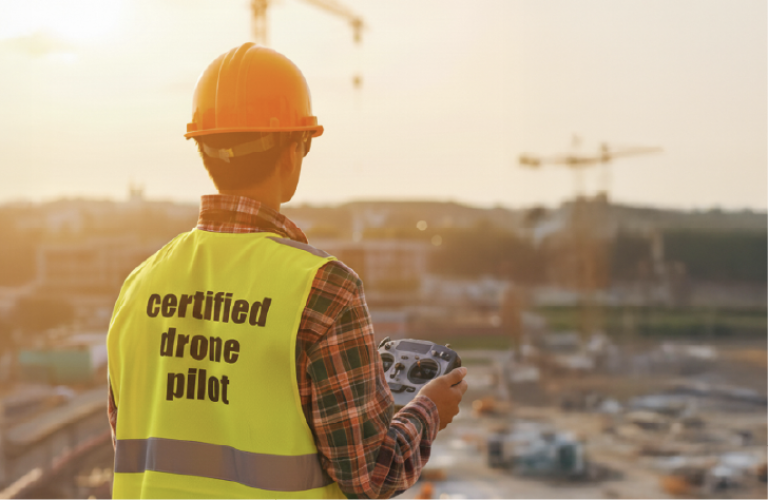
Operating drones in the construction industry requires licensed and skilled pilots. We provide comprehensive training and certification programs that equip operators with mission planning, GCS handling, and BVLOS operations to ensure precision and safety while guaranteeing full regulatory compliance on sites.

Training and certification:

Operating drones in the construction industry requires licensed and skilled pilots. We provide comprehensive training and certification programs that equip operators with mission planning, GCS handling, and BVLOS operations to ensure precision and safety while guaranteeing full regulatory compliance on sites.

Drones & GCS:

Drones & GCS: Our homegrown UAVs are integrated with Niyantrak, an indigenously developed GCS that has been built entirely in-house. It allows for real-time flight planning, live monitoring, and full mission control while enabling the teams to manage operations remotely and ensure safety, faster, data-driven decisions across active worksites.

Drones & GCS:

Our homegrown UAVs are integrated with Niyantrak, an indigenously developed GCS that has been built entirely in-house. It allows for real-time flight planning, live monitoring, and full mission control while enabling the teams to manage operations remotely and ensure safety, faster, data-driven decisions across active worksites.

Mapping Software:

This is necessary to turn the aerial data into detailed 2D and 3D site models for precise measurement, progress tracking, and better design sense. By integrating it with the UAV ecosystem, teams can keep track of earthworks and terrain analysis and make faster, data-driven decisions throughout construction and infrastructure projects.

Mapping Software:

This is necessary to turn the aerial data into detailed 2D and 3D site models for precise measurement, progress tracking, and better design sense. By integrating it with the UAV ecosystem, teams can keep track of earthworks and terrain analysis and make faster, data-driven decisions throughout construction and infrastructure projects.

MULTIPLY PROJECT EFFICIENCY AND OUTPUT WITH SINGLE DRONE SOLUTION

project efficiency of drone in construction industry

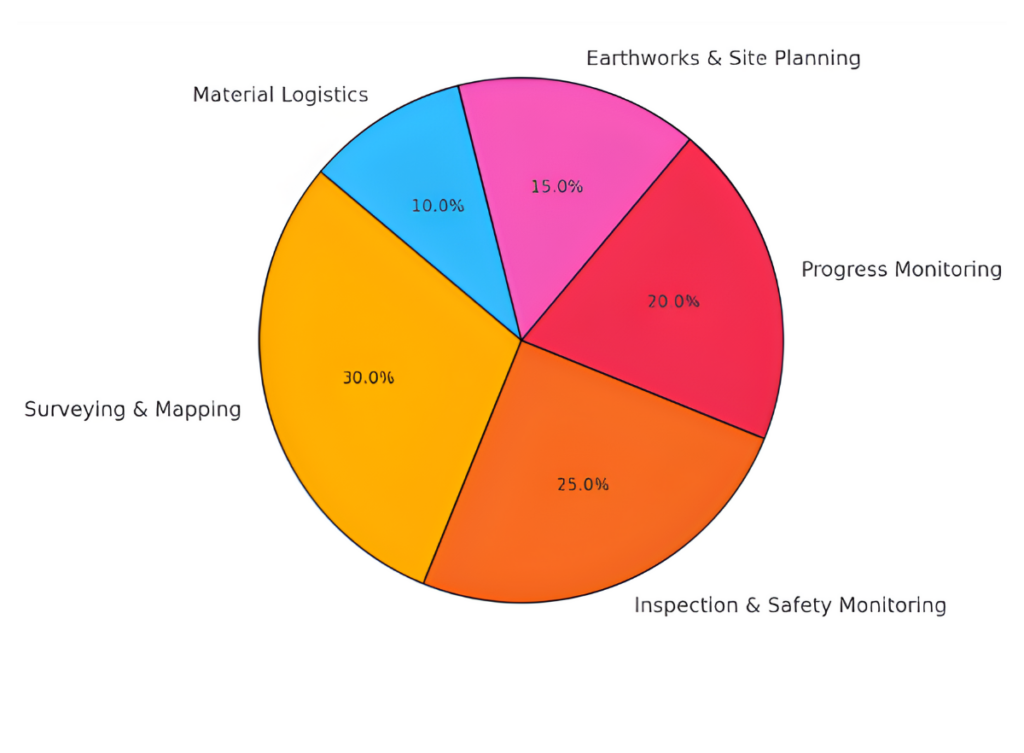
Percentage by use-cases of drones in construction industry 


  • Site Surveying and Mapping

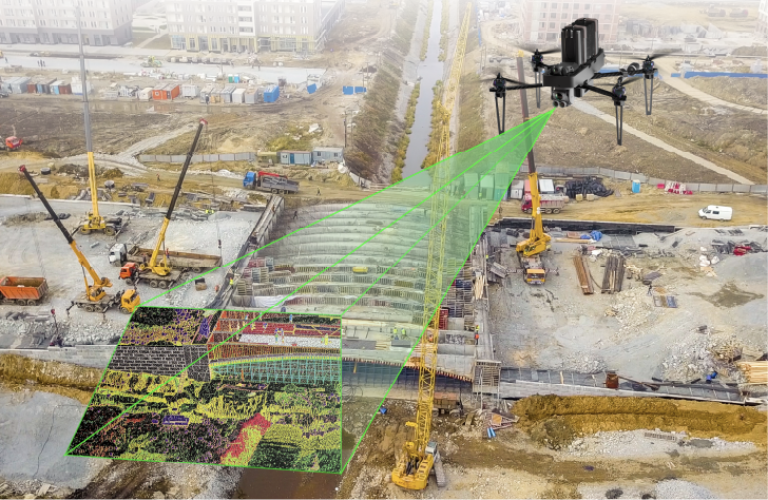
    High-precision airborne mapping converts complex terrain into accurate 2D and 3D models. LiDAR and imaging sensors complete surveys in hours instead of weeks, enabling faster, data-driven planning.

  • Progress Monitoring

    Scheduled drone flights provide visual and quantitative updates on site progress. Teams can compare real-time conditions with project timelines, improving reporting, transparency, and coordination.

  • Inspection & safety Monitoring

    Aerial inspections enhance safety by assessing structures, equipment, and work zones without putting personnel at risk. Thermal and imaging sensors help identify hazards early and support compliance.

  • Carrying multiple Payloads

    Modern construction drones support modular payloads, enabling the transport of sensors, tools, and materials. This flexibility improves efficiency and ensures continuity, even in remote locations.

  • Earthworks & Site Planning

    Advanced 3D mapping and volumetric analysis deliver precise earthwork insights. Real-time elevation data helps optimize material movement and improve accuracy across site planning and execution.

UPSIDES OF DRONE TECHNOLOGY IN CONSTRUCTION INDUSTRY

Drones in construction industry have reshaped the entire project life cycle, making it easy for companies to track the project's progress, streamline communication, and decision-making. Moreover, it has enabled detailed mapping, accurate 3D modelling, and safer operations by keeping site workers out of hazardous areas.

Efficient Data Collection of drones in Construction Industry

Efficient Data Collection

Drones reduce site mapping and inspection time by up to 70%, even in complex environments. This enables faster data capture and supports timely, informed decision-making across all project phases.
Cost-efficient & Easy to Deploy of drones in construction industry

Cost efficient & Easy to Deploy:

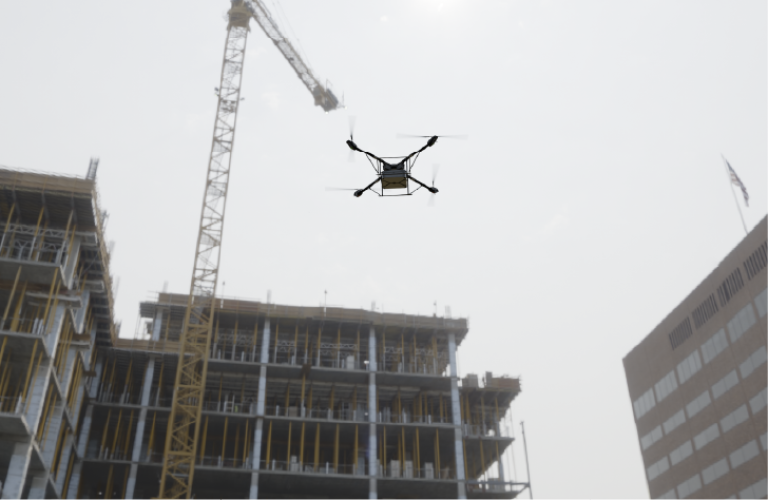
By replacing manual inspections, drones reduce project costs by 60–70% and cut inspection time by up to 80%. They eliminate the need for large crews or equipment while delivering precision and payload capability in a single flight.
Improved Safety of Personnel by drones in Construction Industry

Improved Safety of Personnel:

Drones remove the need for personnel to access hazardous or hard-to-reach areas. Automated flight paths and real-time monitoring ensure safe, consistent, and comprehensive site inspections.
Real-time communication by drones in Construction Industry

Real-time communication:

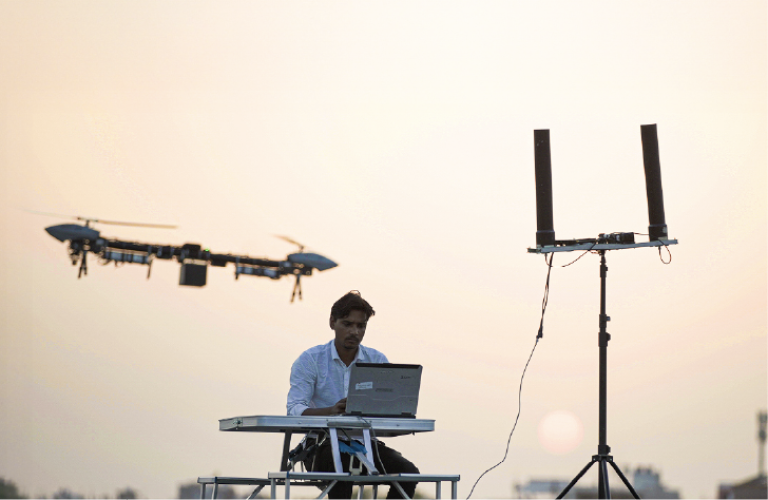
Using live video, aerial imagery, and AI-driven analytics, drones provide a unified, real-time view of the project. Periodic maps and 360° visuals improve coordination and overall project efficiency.

FAQ

FIND ANSWER TO
COMMON UAV QUERIES

The use of drones in construction provides enhanced site efficiency through the capture of real-time aerial data to survey and monitor progress, improving the accuracy and speed of decision-making while reducing costs in general. 

Yes, drones with high-resolution cameras and LiDAR sensors are able to create detailed 2D maps and 3D terrain models fast and with high accuracy, replacing traditional ground surveys that take much longer to complete. 

Absolutely! Drones are designed with advanced safety and redundancy systems that enable them to perform even in complex site conditions. With dual GPS modules, obstacle avoidance sensors, integrated day/night cameras, and automatic Return-to-Home (RTH) features, on-site risks can be greatly reduced and all basic concerns for safety compliance improved. 

Beyond surveying and site monitoring, the drones carry out volumetric measurements of materials, thermal inspections, structural assessments, detailed documentation for compliance, and ESG reporting. In other words, they provide precise data on resource management, safety audits, and environmental analysis, proving to be a very versatile tool in every phase of construction. 

Yes, data drones can be easily integrated with leading construction management and design platforms (such as AutoCAD, Revit, or GIS systems) for seamless workflow continuity. 

Drone-based surveys and inspections considerably reduce demands on labor, rentals of equipment, and project downtime. This leads to faster data collection, fewer delays, and overall cost savings. 

Yes, when flown by professionals and processed through dependable mapping software, drones can achieve accuracies at a pinpoint level. A high level of accuracy ensures data reliability for design validation, progress tracking, volumetric analysis, and quality assurance.