Beyond Visual Line of Sight (BVLOS): Empowering the Future of Long-Range UAV Operations
The Indian drone industry has seen massive growth in recent years. With the introduction of Beyond Visual Line of Sight (BVLOS), the evolution of unmanned aerial vehicles has gone from zero to one. It has made the drones fly autonomously over long distances without being guided manually by a pilot, unlike traditional drone platforms, which require an operator to maintain visual contact while flying. Supported by Make in India, PLI incentives, and rapidly growing enterprise adoption, BVLOS is emerging as the backbone of the next phase of India’s drone revolution, which would be faster, safer, more efficient, and far more transformative than anything seen before. Traditionally, the drone pilots keep the drones withing the direct sight during the flight of the drones, but as the modern missions are expanding, the need of drone reaching and travelling farther than what the human eye can see is rising.
It can be very beneficial for both mid-mile and last-mile delivery. With the Indian e-commerce market rising aggressively and expected to reach $200 billion by 2026, it is seeing drone delivery as an ultimate solution to the long-standing challenges in supply chain management and last-mile delivery. In fact, the delivery sector got the most from the applications of BVLOS drones. Through BVLOS, drones can execute sustained delivery loops between city centres, warehouses, hospitals, and remote outposts. Companies especially into it like Amazon, UPS are offering faster and more efficient delivery methods by using this in their day-to-day operations.
Beyond Visual Line of Sight (BVLOS): Meaning and Its Significance
Beyond Visual Line of Sight (BVLOS) refers to drone operations where the unmanned aircraft lies outside the direct visual range of the pilot, in simple language it can be referred to the drones travelling and reaching the destinations which are beyond the visual light of the pilots, it relies on an autonomous navigation system and is monitored from remote control centres. Whereas the Visual Line of the Sight (VLOS) flies withing the sight range of the pilots, it requires the pilot to always maintain visual contact with the drone. Unlike VLOS, which has limitations of flight, it enables long-distance flights and covers ten kilometres, making them suitable for surveillance, payload delivery and inspection loops. Even the industries are hailing these operations, as it reduces human intervention in flight operations, which increases safety and scales operations without needing multiple pilots on-site. Initially, it will take time to digitise airspace connectivity, particularly to enable these operations which depend on the expansion of 5G networks and reliable autonomous navigation systems. Beyond Visual Line of Sight (BVLOS) changes this completely.
With BVLOS operations:
- Drones can travel several kilometres in a single mission
- A single operator can supervise multiple drones simultaneously
- Missions can be conducted over large industrial assets or remote landscapes
Understanding the Mechanism behind the Operation
The Operation of BVLOS runs on a sophisticated technological system that ensures that the drone is stable and working effectively even beyond visual sight. The framework behind this technological mechanism makes this possible:
GPS Navigation: -
Modern drones rely on advanced GPS and GNSS engineering to with singular accuracy, even over long distances. Basically, with the consolidation of RTK (Real-Time Kinematic) positioning, they accomplish a level of accuracy of centimetres. When things get tricky, this preciseness controls monotones remain unchanging and follow their planned routes perfectly, the pilot does not see them directly
Command and Control (C2) Communication Links: -
The benefit here is that control and control (C2) Communication Tie-ins for Beyond Visual Line of Sight (BVLOS) Processes, potent and reliable communication between the drone and the ground guidance place is substantive, while keeping things clear and accessible. What you need to grasp is that these Command and Control (C2) links constantly partake data such as telemetry information, location, scheme health, and alive video streams.
Detect and Avoid Systems: -
When pushing for better results, the systems detect and avoid pilots, as pilots cannot physically see their droning or obstacles nearby, they and avoid playing a -important office in airmanship refuge. These systems expend a. In everyday terms, once a threat is observed, the droning can mechanically adjust its procedure to avoid collisions and control safe and smooth operation, integrating effectively with current approaches.
BVLOS Ground control commissions (GCS): -
GCS are cared by remote soil control stations or operating sums, making it possible to clearer understanding. Why does this understand this better? The reason for this is that from these hubs, manipulators can access live video flows, telemetry, navigation data and scheme alerts. The main point is that this configuration permits teams to monitor multiple drones simultaneously, control efficient coordination and preserve the highest refuge standards throughout the commission.
BVLOS Operations unlocking various Applications
BVLOS in infrastructure inspection: –
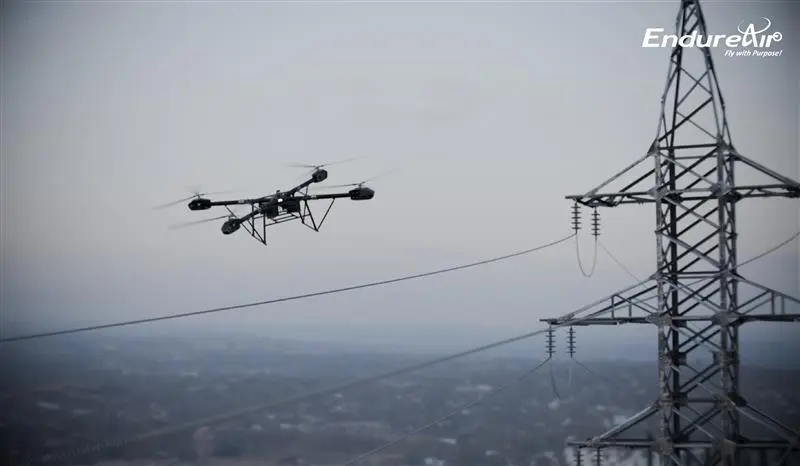
The industry of Infrastructure inspection has always been constrained by safety, distance , and terrain conditions. It has changed this completely. Today, drones with the help of BVLOS operations can inspect various types of assets, which include:
- Power Line Inspection
- Railway track and Highway construction monitoring
- Mining and Industrial sites
- Pipeline & Oil/Gas Corridors
Disaster Relief and Emergency Response: –
The main advantage is that in an emergency, such as timber fires, floods, or earthquakes, BVLOS drones can quickly assess and locate survivors. One element to be aware of is that, because they can quickly cover large regions, they provide emergency teams with situational awareness, reducing risks to responders.
Border Security: –
Long-range drones operating under these conditions are widely used for:
- Border surveillance
- Maritime monitoring
- Military reconnaissance
Agriculture and Environment Monitoring: –
Basically, large-scale farms and forests require monitoring across large areas. BVLOS drones with multispectral detectors can assess the health of flora, detect irrigation problems, and monitor environmental conditions over thousands of hectares.
The Regulatory Push: How global frameworks are opening the skies for BVLOS
Around the world, regulators are recognising the economic and safety benefits of these operations and gradually twisting the policies in their favour. India is also entering into a pivotal phase of implementing from limited pilots to a structured, nation-wide enablement. India’s Directorate General of Aviation (DGCA) has already presented intent to open skies for long-range missions, especially in sectors such as healthcare delivery, surveillance utilities , and infrastructure inspection. In the last two years, multiple trial missions have been conducted in India to test the reliability, validate operational concepts , and understand the airspace requirements for routine operations. These trials have shaped a lot in bringing the BVLOS rules from individual exemptions towards standardised, repeatable approval frameworks. The creation of dedicated BVLOS corridors for logistics and medical delivery is a key part of the Indian roadmap. Such corridors would be used to connect inaccessible rural areas, high-altitude posts, disaster-prone areas, and remote islands using long-range drones. The Government of India has also been integrating digital platforms like Digital Sky, which will eventually support flight permissions, UTM-based airspace management, and automated deconfliction to enable safe operations at scale.