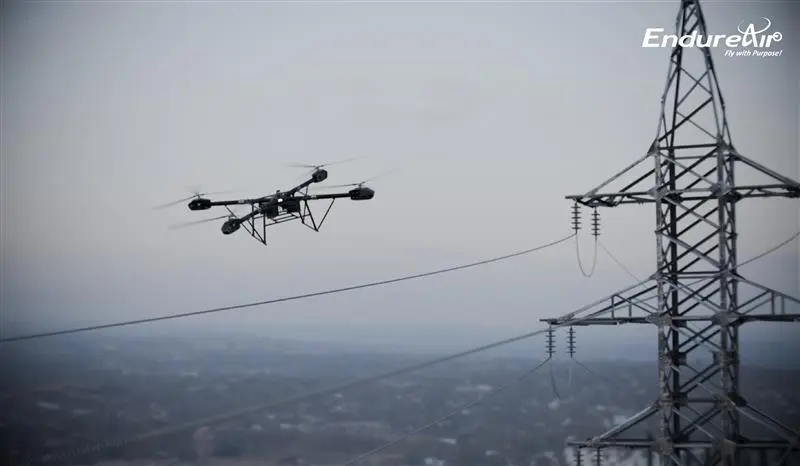
Today’s warfare is not only about power, but it’s about data, speed, and precision. Wars can be won based on intelligence and information. Drone swarming, an autonomous aerial system operating as a coordinated unit of multiple drones, represents the forefront of this transformation. Integrated by AI and machine learning, swarm drones can communicate, adapt, scale up, and execute missions in real-time, requiring minimal human intervention. Each drone in the swarm is a node in a decentralized mesh, continuously analyzing the environment and updating its actions. These drones were resistant to weather changes and could function as surveillance for loitering munitions integrated with multiple numbers of drones in diverse environments.
Hence, these drones are powerful and useful for both logistics and military purposes. This dynamic responsiveness is a reason why global militaries are turning to drone swarms as force multipliers in modern warfare.
The Nagorno-Karabakh Conflict: Gives Limelight to Swarm Drones in the World
The 2020 conflict between Armenia and Azerbaijan shows the impact of drone swarms on the battlefield. Azerbaijan effectively deployed Israeli-made Harop drones loitering munitions, and coordinated UAV systems to destroy Armenian defence forces by neutralizing their battle tanks, artillery, and radar systems with pinpoint precision attacks. The speed, stealth, and scale of attack overwhelmed traditional military assets. This incident shows how a low-cost aerial tool can act as a frontline combatant on a battlefield.
Global Race for Swarm Supremacy: Where Does India Stand?
Countries like the USA (Perdix Quadcopter Drones) and China (indigenous drone swarms) are investing billions in swarm systems. Russia is trying to integrate swarm drones with its 6th-generation aircraft. And India is making efforts to be in this race by fostering public-private defence collaborations. Start-ups like Asteria, Ideaforge Space Research, and EndureAir are supported by the Ministry of Defence and DRDO to develop scalable, lethal, and flexible indigenous combat-ready drone solutions. The whole world is now focusing on network-centric warfare.
India no longer remains an observer in this global arms-tech evolution race. In a significant display of Homegrown defence technology, the Indian Army on the Army Day Parade of 2021 featured a swarm of 75 drones that autonomously conducted high-speed manoeuvres, live tracking, kamikaze strikes, and surveillance simulations. This wasn’t just optics, but it was a declaration by India to the world that India has entered modern drone-powered warfare.
Alakh by EndureAir: A Tactical Breakthrough in Indian Drone Warfare
A notable highlight in India’s indigenous drone arsenal is the ALAKH developed by EndureAir. Built for battlefield dominance in GPS-denied and signal-jammed environments, Alakh is engineered to operate in hostile and diverse weather conditions. Since these drones were encoded with sensors such as LiDAR (Light Detection and Ranging), GPS, Inertial Measurement Units (IMUs), and different communication systems hence they function as a single entity. Each drone is equipped with cameras and advanced algorithms powered by AI and machine learning. Sensors collect real-time data and transfer it to AI, which, as per algorithms, reads the data and facilitates real-time decision-making, enables control and coordination of drones, and also ensures systematic task allocation. To carry out any task, drones can split into different zones, share real-time data, and adjust their routes automatically.
Swarm Drones in Action: Real Warzones, Real Impact, and a Billion-Dollar Defence Tech Race
In recent years, swarm drones have shifted from test ranges to active war zones, redefining asymmetrical warfare across the globe. In Yemen and Libya, Saudi Arabia and UAE-backed forces have employed drone swarms and loitering munitions like the Wing Loong II (Chinese-origin) and KUB-BLA drones supplied via third-party networks to target enemy supply lines and radar posts, causing devastating damage with low operational risk.
Similarly, in Nigeria, military forces fighting against Boko Haram have started using swarm-capable drones such as the CH-4 Rainbow to conduct persistent surveillance and precision strikes in dense terrains where conventional operations are ineffective. Even countries like Turkey have made headlines with their KARGU-2 kamikaze drones, developed by STM, which can operate in swarms and were reportedly deployed in Libya to autonomously hunt and attack enemy combatants, which is a historic first for AI-led lethal engagements.
The widespread adoption of such systems reflects a surge in defence investments: as per defence analytics cited in SDI, the global military swarm drone market is projected to reach $3.25 billion by 2030, growing at a CAGR of over 20%. Nations like the U.S., China, Israel, and India are ramping up R&D budgets and defence procurements, recognizing swarm drones not just as strategic assets but also as a high-value defence tech industry set to dominate future warfare ecosystems.
Intelligence in the Sky: How AI Powers Swarm Drone Function
Swarm drones aren’t just flying machines; but they are also intelligent, autonomous systems capable of functioning as a single unified unit. Each drone is embedded with advanced sensors that secure communication modules, allowing them to perceive enemies with precision. These sensors continuously collect real-time spatial and positional data, which is processed through AI and machine learning algorithms onboard. This enables the swarm to make instantaneous, data-driven decisions, ensuring dynamic coordination, adaptive flight paths, and seamless control. Each drone is further equipped with high-resolution cameras and object recognition capabilities, enabling situational awareness and target detection. The system intelligently distributes tasks among drones, allowing them to split into tactical zones, adjust flight routes, share information in real-time, and autonomously adapt to changing mission parameters, which makes them highly resilient, efficient, and effective in high-stakes operations.
Applications Beyond Combat: Intelligence, Jamming & Rescue
Swarm drones are not only confined to attack missions. But they can also be used as:
Real-time surveillance and terrain mapping
Electronic warfare and jamming operations
Decoy missions to mislead enemy radars
Rescue and reconnaissance during natural disasters
Having a feature of decentralized communication, even if some drones are lost, the swarm continues its operation by enabling another drone to replace making them robust and resilient in dynamic combat zones.
Swarm drones can be India’s Tactical Leap into AI-powered aerial Warfare. They would become the new normal of warfare. With drones like Alakh leading the charge and bold demonstrations by the Indian Army, India has signalled its serious intent to become a leader in autonomous aerial warfare. By investing in AI, indigenous innovation, and strategic defence tech, India is preparing not just for today’s threats but for tomorrow’s invisible wars.
For MORE UPDATES, we encourage you to visit our official website and book a demo.