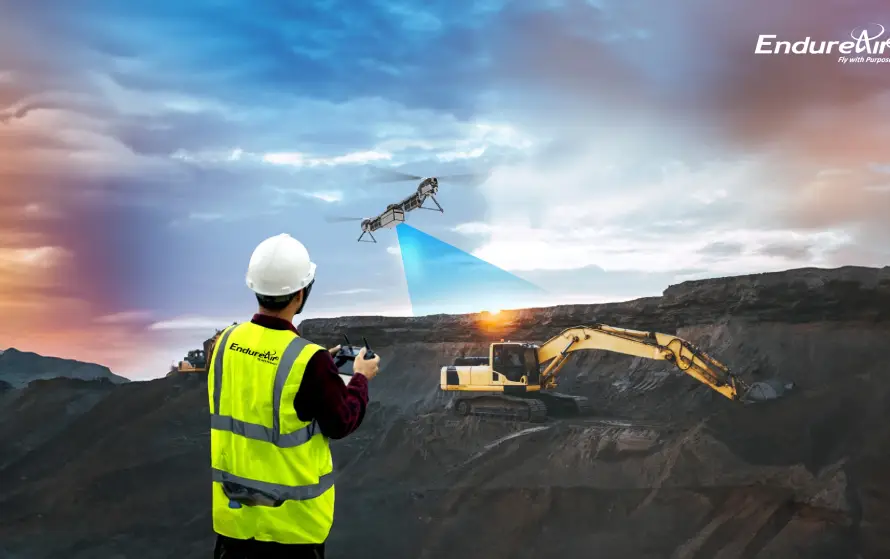
Vertical take-off and landing, or VTOL, is described as an aircraft that can take off, hover, and land vertically without the use of a traditional runway. These crafts combine the speed, range, and efficiency of fixed-wing aircraft with the vertical lift and landing capabilities of helicopters.
An aerial solution for evolving world
As aviation is evolving, the debate between fixed-wing and VTOL platforms will define how efficiently and flexibly future missions are carried out. Unlike conventional aircraft, VTOLs don’t need runways; these aircraft can operate in crowded areas, which makes them perfect for urban missions, SAR, and quick deployment in difficult terrain.
On the other hand, fixed-wing aircraft outperform VTOL in terms of endurance, payload, speed, and fuel efficiency. Because of their aerodynamic characteristics, these crafts are ideal for long-duration activities, delivering logistics, and performing surveillance. By combining the advantages of fixed-wing and rotor systems, these drones can be utilized to revolutionize future operations.
Real-world applications of VTOL drones
From surveillance to survey, VTOL drones are shaping today’s operations across various sectors in a much efficient and cost-effective manner. Let’s go deep down with some use cases where VTOL-based UAVs have proven beneficial to mankind:
Military operations
ISR missions heavily rely on VTOL drones. They are perfect for tactical missions in critical areas as they can fly for extended periods of time and land or take off in confined situations. For these kinds of missions, drones like Alakh and Vibhram from EndureAir are an ideal option. They are perfect for clandestine military operations due to their high-altitude performance and VTOL capability.
Monitoring of Wildlife and Climate
VTOL drones are transforming the way scientists monitor animal conservation and study climate change. Their ability to function silently across vast regions without revealing their auditory signature makes it possible to map habitat, identify poaching threats, and monitor endangered species even in remote locations.
Mapping and Surveying
Coming to the sectors like agriculture, mining, and infrastructure, VTOL drones are capable of providing precise and efficient aerial surveys. They are equipped with high-resolution cameras and advanced imaging systems to generate detailed maps, monitor crop health, assess soil quality, and analyze land use over vast areas in a single flight. In this way, it reduces the use of manpower, minimizes operational costs, and enhances safety by minimizing the need for manual inspections in hazardous or inaccessible zones.
Life-Saving Missions
VTOL drones enable quick deployment during natural or man-made calamities and can easily operate in areas with a lot of debris. In order to successfully locate survivors and supply vital medical supplies during SAR operations, they are outfitted with thermal cameras and offer live data transmission. Endure Air's drones, especially the Alakh and Sabal, can be utilized in disaster relief. While Sabal and its variants have been created to deliver and dispense heavy goods with precision, Alakh, with its FPV features, is more adapted to locate survivors and navigate through confined locations.
What’s Holding VTOL Drones Back?
While VTOL drones offer remarkable versatility, combining the vertical take-off of multirotor with the range and efficiency of fixed-wing aircraft, they also present certain operational challenges, which should be considered:
Battery Limitations
The majority of VTOL drones, particularly the electric models, continue to have issues with short battery life, which has an immediate effect on payload capacity and flying time. Achieving maximum endurance without sacrificing effectiveness is one of the crucial R&D priorities.
Complex engineering with Higher Costs
VTOL systems integrate aspects from both fixed-wing aircraft and multirotor aircraft, leading to more complicated designs that require higher maintenance needs, greater production costs, and increased technical expertise to fix them.
Weather Vulnerability
VTOL drones are still vulnerable to harsh weather such as strong winds, heavy precipitation, and extremely high temperatures despite technological advancements. Stability and safety in bad weather remain significant operational issues, particularly for autonomous navigation.
Regulations
In many areas, BVLOS (Beyond Visual Line of Sight) operations, which are crucial for numerous remote or large-scale missions, remain severely restricted due to security concerns.
Reimagining Air Mobility with VTOL
The future of VTOL technology is not just promising, it’s transformational too. As this sector is moving forward toward faster, greener, and more autonomous systems, VTOL crafts are expected to play a central role in shaping the next generation of mobility and operations. Here are some major future applications of VTOL that one should look into:
Urban Air Mobility (UAM):
VTOL planes are the epicentre of future ideas like Air Taxi. Enterprises such as Lilium and Volocopter are working on eVTOL solutions to decrease traffic in urban areas by making short-distance passenger flights within cities a reality.
Defence and Tactical Superiority
In defense, VTOL drones will continue to evolve as stealthier, highly autonomous, and capable of carrying out precision missions in GPS-denied or high-risk zones. Integrating it with satellite communication, swarm intelligence, and real-time analytics will enable more strategic applications.
Logistics and Last-Mile Delivery
VTOL drones are poised to transform last-mile logistics in response to the growing need for quicker and more environmentally friendly delivery. Many quick commerce firms in India, like Zepto and Dunzo, are testing drone-based delivery systems for humanitarian aid, e-commerce, and medical goods.
Smart Cities & Infrastructure Monitoring
When paired with IoT and 5G networks, VTOL UAS can be used in urban environments to track pollution, monitor traffic, check buildings, and even to improve public safety. Their presence and constant monitoring might decrease crime rates and increase urban security in general.
Greener Aviation
Electric and hybrid VTOL crafts are in line with one goal of decarbonization. As battery and hydrogen fuel cell technologies progress, VTOL platforms will provide greener alternatives to helicopters and small aircraft that currently operate on diesel or gasoline.
The capabilities of VTOL drones are increasing day by day due to their combination of agility, endurance, and versatility. However, to fully unlock their potential, especially in BVLOS missions, is still a regulatory challenge that must be addressed. With continual improvements in autonomous navigation, safety systems, and supportive policy frameworks, VTOL drones are poised to become important instruments for various industries ranging from disaster response to precision agriculture and defence. Their future depends on finding the appropriate balance between innovation and regulation to enable safe, scalable, and impactful deployment.
All drones from EndureAir Systems comprise both VTOL and autonomous navigation features, making them reliable for all types of weather and conditions. For more, we encourage you to visit our official website and book a demo.