India ranks among the most disaster-prone nations globally, with floods, cyclones, and landslides because of its geoclimatic and socioeconomic conditions, which have resulted in a loss $56 billion over the last five years. Most recently, in the face of devastating floods in Punjab and parts of Kashmir, rivers like the Sutlej and Ravi overflowed, leading to the submergence of entire villages and cutting off access to thousands of people. This underscores the urgent need to improve the way we mitigate disasters. A key challenge in disaster relief is reaching affected populations when road connectivity is severed. This is where advancements in aerial technology, specifically the role of logistics drones in disaster management, step in to bridge the gap. The role of logistics drones in disaster management in India is becoming a game-changing element that can be a reliable solution for both natural and man-made disasters. It can deliver medicines, food, and rescue supplies to areas where road connectivity has been lost, provide real-time aerial assessments, and speed up relief operations.
Bridging Gaps in Crisis with the Role of Logistics Drones in Disaster Management
In the chaos and aftermath of any disaster, the primary challenge is often logistics. Whether it is regarding rescuing the survivors, delivering critical supplies such as oxygen cylinders, food, or medical supplies, this is where a logistics drone in disaster management can be a game-changer. They are made to lift heavy multiple payloads, can overcome impassable roads, are resistant to weather conditions, and can withstand communication blackouts.
This section takes a detailed look at how supportive logistics drones are for disaster management:
Delivering Pivotal Supplies:
During any disaster, delivering essential items to survivors in ‘Golden Hour’ can be the difference between life and death. Conventional delivery methods are often too slow, taking hours or even days to reach survivors. In contrast, logistics drones can make the same deliveries in minutes, ensuring crucial aid arrives when it's needed most.
With dual GPS support and a VTOL system, this logistics drone can drop a payload exactly where required, making it reliable for delivering first aid, vaccines, glucose drips, medicines, and blood to perform primary treatment.Supporting Search and Rescue (SAR) Operations:
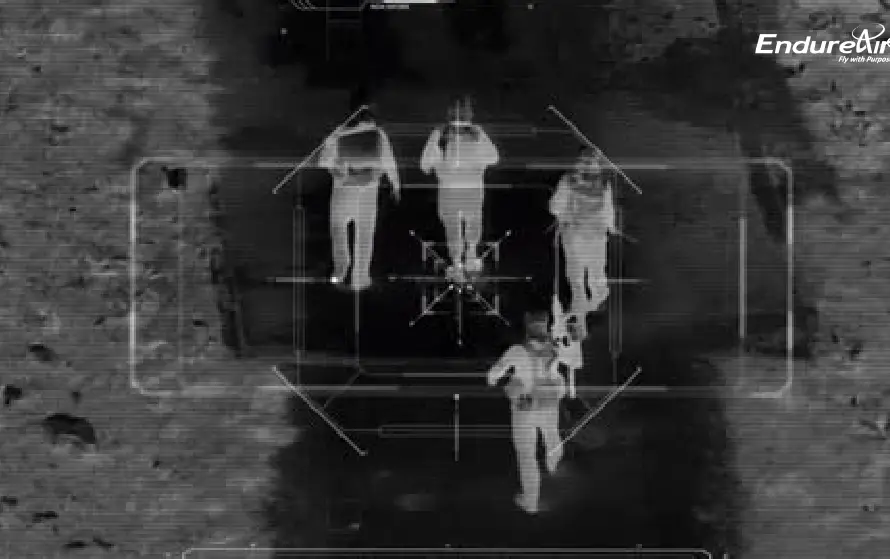
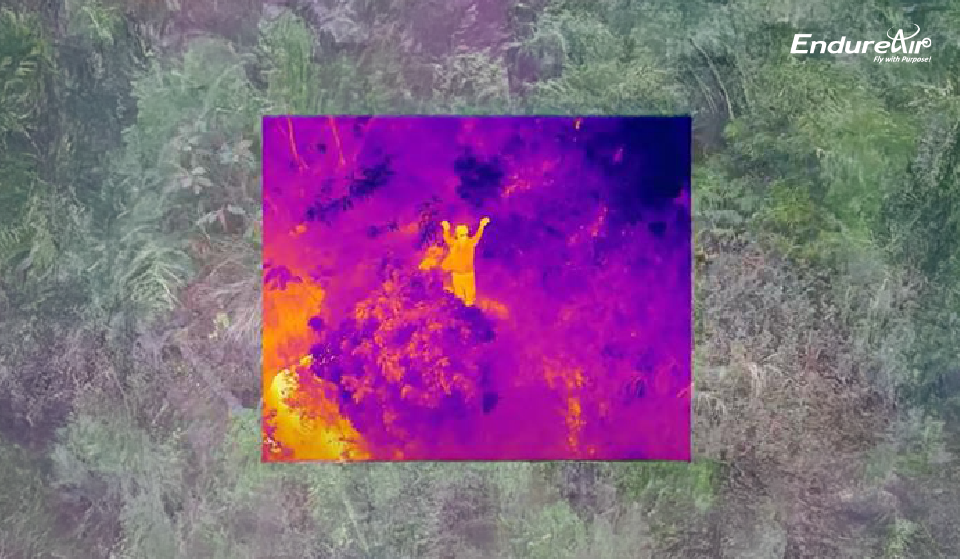
Utilising logistics drones in disaster management, equipped with high-resolution and thermal imaging cameras, can act as an eagle’s eye in locating survivors and provide an edge to rescue teams throughout SAR operations.They can detect heat signatures from a survivor trapped under debris even in low-visibility conditions like smoke or fog. This real-time support can allow SAR teams to accurately pinpoint locations, assess risks, and navigate toward survivors, ensuring they receive urgent medical care and can be transported to hospitals on time.
Post-Disaster Recovery and Damage Evaluation:
Evaluating the damage and losses due to the disaster, logistics drones in disaster management can provide high-resolution imagery and 3D models of affected areas, which help engineers and authorities assess infrastructure damage and plan for reconstruction more efficiently. This not only helps to speed up the recovery process but also ensures that the taxpayers' money is used for the desired purpose.
Preventing Monitoring:
Beyond immediate relief, logistics drones can also be used for crucial real-time environmental monitoring. By tracking changes such as rising water levels, melting glaciers, and deforestation that lead to landslides, drones can help predict and prevent future disasters, saving countless lives and significant expenditures..
Why do logistics drones outperform in disaster management than existing solutions?
Due to their numerous novel features, logistics drones in disaster management outperforms conventional alternatives in the following ways:
Role of logistics drones in disaster relief: How They Saved Lives in India
There are some major cases where logistics drones in disaster management came as a boon for the survivors and the mass population in India.
The Kerala Floods (2018 & 2019)
Drones were used to provide aerial footage to find stranded people and guide rescue boats and teams to their exact locations, often in areas that were otherwise inaccessible.
Cyclone Amphan (2020)
After Cyclone Amphan hit West Bengal and Odisha, drones were used to assess the scale of the destruction by providing a bird's-eye view of the damage to homes and infrastructure, which helped in speeding up the distribution of relief materials and rehabilitation efforts.
Uttarakhand Flash Floods (2021)
After flash floods accompanied by landslides, drones were used to locate survivors and to deliver essential supplies like food packets and small communication devices to communities cut off by debris.
Flashback 2021: When EndureAir drones became lifelines in disaster-hit Chamoli
In 2021, a portion of the glacier broke off in Joshimath (Chamoli), Uttarakhand, causing the loss of the lives of 30 people, washing of the entire village and two major hydel projects. This was the first time that NDRF called startups to help locate the survivors, and EndureAir Systems was one of them. It not only conducted search operations to look for survivors who may need food, water, or as a communication device, but also inspected the hydel power project sites to assess the extensive damage done by the flood. This created high-quality videos of the whole hydel project, which helped engineers obtain a clear perspective of the extent of the damage. For this, EndureAir used their high-endurance unmanned helicopter VIBHRAM, which could carry a payload of 5kg and fly for 80 minutes.
Beyond this, EndureAir has developed SABAL, an exclusive drone with enhanced payload capacity and superior endurance for even the most demanding tasks. Inspired by the Chinook, the SABAL can carry up to 100 kg, making it a powerful solution for delivering heavy supplies like ammunition, medical kits, tools, and equipment to remote or high-altitude regions. Its variable pitch ensures exceptional endurance, allowing it to perform critical missions in challenging weather and rugged terrain where other drones might struggle.